Trusted by Florida Homeowners Since 198624/7 Emergency HVAC Service
Florida HVAC TipsHome ComfortAC Guidance
Quick Answer
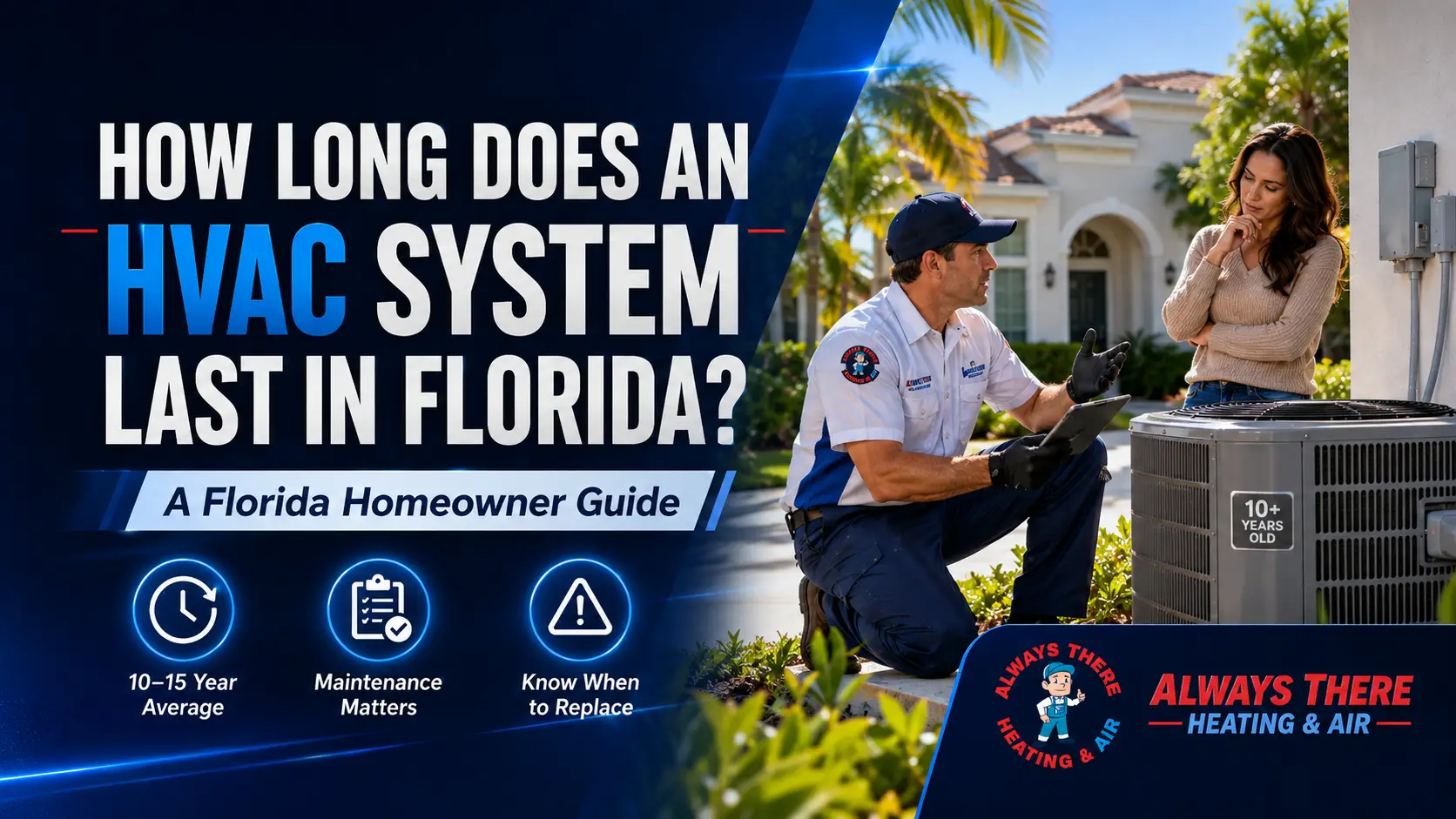
How Long Does an HVAC System Last in Florida?
Most HVAC systems in Florida last about 10 to 15 years.
Because Florida systems run more often in high heat and humidity, lifespan
depends heavily on maintenance, installation quality, airflow, and how
quickly repair issues are addressed.
Florida is hard on air conditioning systems.
Between long cooling seasons, heavy humidity, salt air in some areas, and
near-constant use, HVAC equipment in Florida usually works much harder than
it would in cooler climates. That means homeowners here often face
replacement decisions sooner than they expect.
So, how long does an HVAC system last in Florida?
In many homes, an HVAC system lasts around 10 to 15 years,
though some units fail sooner and others last longer depending on
maintenance, usage, installation quality, airflow, and overall system
condition.
If you want your system to last as long as possible, the key is
understanding what affects HVAC lifespan and recognizing when your
equipment is starting to decline.
Average System Life
What Is the Average HVAC Lifespan in Florida?
For most Florida homeowners, central air conditioning systems typically
last about 10 to 15 years.
That range can vary depending on:
How often the system runs
How well it has been maintained
Whether it was installed correctly
The quality of the equipment
Local environmental conditions
How quickly small issues were addressed
In a hot climate where air conditioners may run for much of the year,
wear adds up quickly. A system that might last longer in a milder part of
the country may age faster in Florida simply because it rarely gets a
break.
Regular
air conditioning maintenance
can help reduce unnecessary strain and give your equipment a better
chance of reaching the upper end of its expected lifespan.
Florida Climate Factors
Why HVAC Systems Often Wear Out Faster in Florida
Florida puts extra stress on cooling systems in several ways.
01
Longer Cooling Seasons
In many parts of Florida, air conditioning is not just a summer
need. It is a year-round necessity. More run time means more wear
on components, more strain on motors, and more opportunities for
performance to decline over time.
02
High Humidity
Humidity makes your system work harder because it is not just
cooling the air. It is also helping remove moisture from inside
the home. That added workload can affect efficiency and long-term
wear. The U.S. Department of Energy provides additional
information about
HVAC humidity control in hot-humid climates
.
03
Salt Air in Some Areas
For homes near the coast, salt in the air can contribute to
corrosion on outdoor equipment. That exposure may shorten the life
of the condenser and other components when routine upkeep is
neglected.
04
Heavy Demand During Peak Heat
Even a well-functioning system may struggle more during extreme
summer heat. Repeated high-demand cooling cycles can accelerate
wear, especially when the equipment is already older or operating
inefficiently.
Common Lifespan Problems
What Shortens the Life of an HVAC System?
Several common issues can shorten HVAC lifespan faster than homeowners
realize.
🛠️
Lack of Maintenance
Skipping regular service is one of the fastest ways to wear a
system down early. Dirty coils, clogged filters, drainage issues,
and ignored warning signs all create extra strain.
A professional inspection and cleaning can help remove buildup and
catch performance problems before they become more serious.
Homeowners can also review the official
ENERGY STAR HVAC maintenance checklist
for general maintenance guidance.
🌬️
Dirty Air Filters
When airflow is restricted, the system has to work harder. That
added strain can affect comfort, energy efficiency, and long-term
reliability.
The U.S. Department of Energy explains that a clogged filter can
reduce airflow, increase system run time, and add wear to the
equipment. Its guidance on
proper HVAC filter installation and care
provides additional information.
📐
Poor Installation
Even a high-quality HVAC system can underperform if it was
installed incorrectly. Sizing problems, airflow issues, and setup
errors can all shorten its usable life.
ENERGY STAR notes that proper equipment sizing, airflow, ductwork,
and refrigerant charging all affect performance. Its
HVAC quality installation guidance
explains why installation quality matters.
⚠️
Ignored Repairs
Small repair needs can turn into larger failures when they are left
unresolved. Components forced to operate under stress often wear
out faster and may place additional strain on the rest of the
system.
Professional
AC repair services
can help correct problems before they contribute to more extensive
damage.
Warning Signs
Signs Your HVAC System May Be Nearing the End
Even if your system is still running, there are signs that it may be
getting close to replacement age.
Rising energy bills
Uneven cooling
Frequent repairs
Longer run times
Weak airflow
More indoor humidity
Unusual noises
Reduced comfort during peak heat
A system that checks several of these boxes may still operate, but that
does not mean it is operating well.
If your unit is older and these symptoms are becoming more common,
replacement may be a smarter long-term investment than continuing to
patch it.
ENERGY STAR recommends considering replacement when an air conditioner
or heat pump is more than 10 years old, particularly when comfort,
efficiency, or repair concerns are becoming more noticeable. Its
heating and cooling replacement guidance
can help homeowners understand common replacement indicators.
Maintenance and Longevity
Can Regular Maintenance Help an AC Last Longer?
Yes, in many cases it can.
Routine maintenance gives your system a better chance of reaching the
upper end of its lifespan by helping it run cleaner, more efficiently,
and with less overall strain. It also gives a technician the opportunity
to spot wear before it turns into a breakdown.
Maintenance cannot make an aging system last forever, but it can help
reduce unnecessary stress and support more dependable performance over
time.
When Should You Repair vs. Replace an Older HVAC System?
This is the question many homeowners begin asking once a system reaches
the 10-year mark.
Repair May Make Sense
Consider Repair When:
The system is relatively young
The issue is isolated
The unit has otherwise been dependable
Cooling performance is still good overall
Replacement May Make Sense
Consider Replacement When:
The unit is 10 to 15 years old or older
Repair issues are becoming more frequent
Cooling is inconsistent
Your electric bills keep climbing
Comfort has noticeably declined
The system struggles during summer heat
A professional evaluation can help determine whether the issue is
repairable, maintenance-related, or a sign that the system is simply
nearing the end of its useful life.
Is It Worth Replacing an Older System Before It Breaks Completely?
In many cases, yes.
Waiting until the system fully fails can leave you making a rushed
decision during the hottest part of the year. Replacing an aging unit
before a total breakdown gives you more control over timing, budgeting,
equipment selection, and installation options.
Planning ahead can also reduce the stress of emergency service when the
house is no longer cooling.
Homeowners researching newer equipment can review ENERGY STAR’s
information about
energy-efficient heating and cooling
before comparing replacement options.
Protect Your Equipment
How to Help Your HVAC System Last Longer in Florida
If you want to maximize system lifespan, focus on the basics:
Change filters regularly
Keep the outdoor unit clear
Schedule routine inspections
Address repair issues early
Do not ignore weak airflow or rising energy bills
Have the system professionally cleaned and evaluated as needed
For Florida homeowners, proactive service matters more because the
cooling system works harder for more of the year.
The ENERGY STAR maintenance checklist also recommends checking
thermostat operation, electrical connections, system controls,
condensate drainage, airflow, and cooling components during professional
service.
Final Thoughts
If you are wondering how long an HVAC system lasts in Florida, the best
general answer is about 10 to 15 years, with
maintenance and usage making a significant difference.
Some systems wear out sooner because of heavy demand, poor upkeep, or
repair issues that went unresolved. Others last longer because they were
installed properly, maintained consistently, and serviced before small
issues had a chance to grow.
Not Sure Whether Your HVAC System Still Has Life Left?
Schedule an inspection with Always There Heating and Air to evaluate
your system’s condition and find out whether maintenance, repair, or
replacement makes the most sense.
Most HVAC systems in Florida last around 10 to 15 years, though actual lifespan depends on maintenance, run time, installation quality, and local conditions.
If your system is older, needs frequent repairs, struggles to cool consistently, and causes rising energy bills, it may be time to consider replacement.